Tactical layer · Verified September 9, 2026
Warhounds Combat: Hit Chance, Cover and Ballistics
Each bullet rolls separately. Cover can turn a hit into a reduced-damage graze, and a missed bullet can hit an ally. Aim at an enemy and read the factor breakdown on the right before firing.
How do hit chance, ballistics and RNG work?
Hit chance is calculated for each bullet, so a burst is not one all-or-nothing roll. The developer’s August 19 explanation says sniper rifles fire a single shot, while other weapons’ bullet counts depend on type and level.
| What to inspect | What the developer confirms |
|---|---|
| Soldier Accuracy | Higher Accuracy improves hit chance. |
| Target cover | Cover reduces a clean hit’s likelihood and increases the chance of reduced-damage grazes. |
| Distance | Each weapon type has an optimal engagement range. |
| Target position | Position affects the final calculation, including graze and critical chances. |
Aim at the enemy to see the factor breakdown in the panel on the right. The post includes a three-bullet percentage sequence but does not supply the complete formula or universal values for every weapon.
Can you hit your own soldiers?
Yes. A missed bullet continues along its trajectory and can strike an ally, another enemy or an object. Keep the firing line clear and inspect what is behind the intended target.
What the official material confirms
Lines and angles
Steam tells commanders to calculate lines of fire and flank angles.
Cover changes
The store lists destructible cover and tells players to break cover.
Vertical play
High ground and vertical gameplay are explicit features.
Overwatch shape
Cone overwatch is named in the feature list.
Read geometry before probability
The public description makes position central: establish a clean line, look for a flank, check whether cover can be removed, then compare elevation. This is a useful order for diagnosing a tactical problem because each item is visibly tied to the confirmed feature set. It is not a promise that the game resolves every shot deterministically.
The official site also describes destructible environments and a range of urban and natural locations. Terrain therefore changes the available geometry, but the sources do not publish material health, cover bonuses or elevation modifiers.
Tools that change information and sight lines
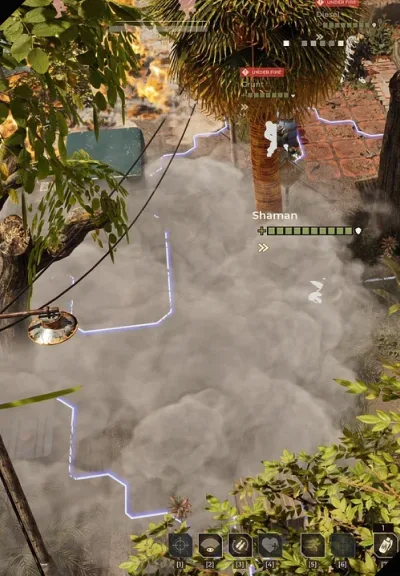
Steam names drones, combat scanners, smoke and optical camouflage. At a planning level, these tools suggest four questions: can you reveal information, deny enemy sight, protect movement or create a safer engagement? Specific ranges, durations, cooldowns and class restrictions remain outside the verified source set.
A repeatable way to review a difficult turn
When a shot, movement or overwatch result is unclear, separate what you can observe from what you are tempted to infer. Record the acting unit, target, visible line, cover state, relative elevation, displayed chance and any tactical tool in effect. Then change one visible condition and compare the next attempt where the game permits it.
- Trace the line: identify what stands between the attacker and target.
- Check the angle: compare frontal and flanking positions without assuming a hidden bonus.
- Inspect terrain: note whether cover was damaged, removed or changed during the turn.
- Read the interface: capture the values and status text shown by the current build.
- Separate observation from rule: one result can suggest a question but cannot prove a universal formula.
This is a diagnostic worksheet, not an official combat sequence. Its purpose is to produce better evidence for future guide updates and clearer bug reports.
Which combat details need rechecking after updates
Any exact action cost, chance, weapon value, tool duration, range, class restriction or cover modifier is patch-sensitive. Those values should be added only with a current official source or reproducible in-game evidence tied to a version. General feature names can remain useful longer, but they should still be reviewed if official patch notes describe a system change.
Until that evidence exists, the squad guide uses mission questions instead of fixed builds, and the mission guide avoids map-specific solutions.